Several years ago, I led a tour of senior adults around the Welch College campus. Some members of the group were familiar with Welch, but for a few, it was their first visit. At the end of the tour, I asked if anyone had a question. One lady replied, “Until today, I didn’t know much about your college. But something stood out to me today. I noticed that your students look, act, and dress more professionally than most college students I’ve seen. Why is that?”
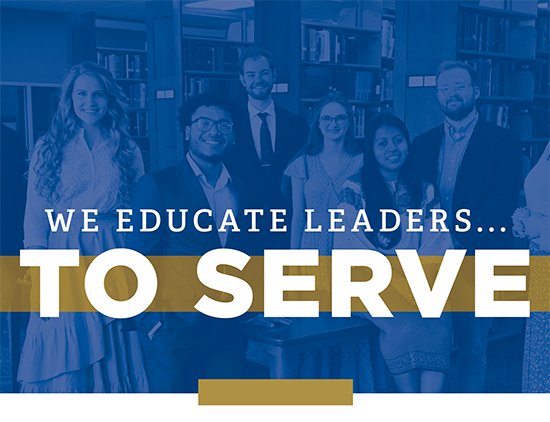
I reminded her of the college mission statement I shared at the beginning of the tour: to educate leaders to serve Christ, His Church, and His world through biblical thought and life. I then asked, “Do you remember the third word of the mission statement? We exist to educate leaders. Any college can educate students; Welch College exists to train leaders. Part of that training requires that we encourage them to begin to think, act, and even dress like leaders.”
She smiled and replied, “Now that is something I can support.”
Part of leadership training demands we consider the vital relationships leaders must develop. Whether a pastor, a banker, a doctor, or a stay-at-home mom, healthy relationships are key to leadership development and success. A. J. Mathieu, of the Malphurs Group, notes, “By prioritizing healthy relationships, churches can create a welcoming and supportive environment that fosters spiritual growth, strengthens community, and lays a solid foundation for successful revitalization.” Godly, healthy relationships can impact any revitalization effort, whether it deals with a local church, a business, or a growing family.
The first and most important relationship leaders should prioritize is their relationship with Christ. In Four Views on Eternal Security, J. Matthew Pinson observes, “Even though we are not saved by works, we should have a faith that works. As we utilize the ordinary means of grace granted to us by the Holy Spirit (i.e., Bible study, Bible meditation, prayer, worship — both corporate and private, evangelizing, serving, fasting, giving to help those in need), we grow in the likeness of Christ and He is formed in our hearts. Spiritual formation for the pastor/leader is essential if he is to lead others to spiritual maturity.”
The Apostle John, in his first epistle, rightly noted a right relationship with God is closely linked to a right relationship with other people (1 John 4:20). Leaders prioritize and maintain a healthy, vibrant, growing relationship with the Lord.
Leaders also prioritize relationships with family members. Pastors and those in vocational ministry can find another church, but they cannot replace their families. When former Welch College President Charles Thigpen was in college, someone invited him and his colleagues to visit the widow of a famous evangelist. Prior to the visit, the professor warned the students, “You can ask Mrs. ____ anything you wish about her husband’s ministry, but you cannot ask any questions concerning their children.” Dr. Thigpen went on to explain that while the famous evangelist preached before multitudes and witnessed many come to Christ through his ministry, apparently his own children died without Christ.
Healthy, God-honoring relationships between the leader and family are vital if the leader desires effective ministry. Scott Ball, in a podcast on church revitalization, said, “Our families are not just an extension of ourselves; they reflect our calling and ministry. They provide us with a support system, love, and grounding that fuels our passions for serving others. Neglecting these vital connections not only affects our personal wellbeing but can also hinder our ministry effectiveness.”
Scripture reminds us iron sharpens iron (Proverbs 27:17). Thus, leaders see the value in maintaining good relationships with other leaders and are strengthened by them. We are not islands unto ourselves. God designed us to need each other, and we are most effective when we work together and encourage one another in the process. Leaders seek other leaders who have “been there, done that.” One pastor noted we can learn what to do from some leaders and what not to do from others. In either case, we learn.
In my travels, I meet many Welch College alumni. I find it interesting few recall specific courses or lectures. But most remember professors, mentors, and faculty/staff members who made lasting impressions on their lives. Leaders seek other leaders for encouragement, accountability, and enlightenment and maintain solid relationships with them.
Over the last few years, our denomination has been inspired by the words “Better Together.” Those words aren’t merely a catchphrase; we indeed are better together when we, as a movement, embrace and encourage healthy relationships with one another. No church can do everything alone; there is indeed strength in numbers. If we believe in the providence of God, and Free Will Baptists still do, we must believe God has guided, guarded, and governed our Free Will Baptist denomination for “such a time as this.”
Leaders actively involved in their local, state, and national associations and ministries find others with the same desire to win people to Christ and impact His Kingdom for eternity. As I reflect on my own family, I am grateful every meal, every purchase of clothing, and even our home were provided through the generosity of Free Will Baptist people. Sometimes, the ministry road was rough and people were difficult to love, but relationships with my Free Will Baptist family have, many times, been more enriching and closer than my biological family. As Gaither wrote, “I’m so glad I’m a part of the family of God.”
In Classical Arminianism, F. Leroy Forlines maintained man was created to have and enjoy relationships with God, the created order, others, and himself. Sometimes, the relationship with self can be the most challenging to maintain. Peter Scazzero writes, “Just as the larger part of an iceberg remains below the surface, believers fail to address the deep layers that exist well beneath our day-to-day awareness. True spiritual formation not only addresses the 10% that is visible, but also the 90% that lies beneath the surface. The problem is that a large portion (what lies below the surface) remains untouched by Jesus Christ until there is a serious engagement with…emotionally healthy spirituality.”
While maintaining a healthy relationship with self might seem identical to the first relationship I mentioned (relationship with Christ), it is not. Leaders should prioritize self-care, encompassing physical, emotional, psychological, and spiritual wellbeing. Since man is comprised of body, soul, and spirit, leaders place strong emphasis on maintaining each of these areas daily. Many leaders find themselves hindered, or even disqualified, because they failed to value a biblically-directed, Spirit-empowered relationship with themselves.
Many institutions of higher learning educate the mind. At Welch College, we educate leaders using what Forlines described as “whole life theology,” a theological paradigm that trains head, heart, and hands. If we are to revitalize our campuses, our churches, our businesses, and our families, developing and maintaining spiritually healthy relationships is vital. The old maxim holds true: it is not (necessarily) what you know, but who you know (and with whom you have relationships) that determines a great leader.
About the Writer: Dr. Todd Parrish is vice president for institutional advancement at Welch College. Learn more about how Welch College trains Christian leaders at welch.edu.