Political and cultural conservatives have spent several decades sounding alarms about the state of the family in our society. A slew of articles or podcasts bemoan the rise of single motherhood, sexual libertinism, pornography, and abortion. However, as Wendell Berry noted in the early 1990s, these conservative defenses of the nuclear family have generally rung hollow because they fail to address the whole problem, specifically skirting the “economic integrity of the household.”
For Berry, any attempt to respond to the current cultural crisis surrounding the nuclear family must address the implications of women’s liberation from the home and full entrance into the public sphere of the workplace. [1] Together, let’s consider the technological and economic changes that made this fundamental social transformation possible and now make it so difficult to imagine any other world.
Ideas Have Consequences
As I have written before, while many women involved in early feminist activism had good cause to be suspicious of men and marriage based on their own experiences with wicked men (and women), their attempts to address specific problems often led to personally and socially destructive relationships with men.
The early-feminist, abstract ideas of Mary Wollstonecraft, Olympe de Gouges, and Elizabeth Cady Stanton faced significant hurdles when applied to the real lives of women. Most nineteenth-century women rejected feminism outright for a host of religious, philosophical, and cultural reasons. [2]
However, even women inclined to embrace feminist ideas recognized the practical dangers of single motherhood and the severe social exclusion resulting for them and their children in the nineteenth century. [3]
Even if a woman remained chaste, she had few ways to provide a living without the support of the family structure. Unless a woman came from a very wealthy background, the burdens of providing the income to acquire and care for a home, homemade clothing, homemade food, and the other (often homemade) necessities of life required the combined labor of a family. For these practical reasons, few women could follow the feminist calls for the destruction of the family.
Industrial Revolution
Philosopher Charles Taylor explains how the images, stories, and legends celebrated by societies shape the imaginations of individuals, making specific ideas and practices legitimate while excluding others. [4] Economic arrangements and technological innovations also play a key part in shaping the social imagination (though we should never see them as deterministic). Rather, as historians of technology and economics demonstrate, these systems are shaped by the cultures that create them, and then influence and respond to the societies they inhabit. [5]
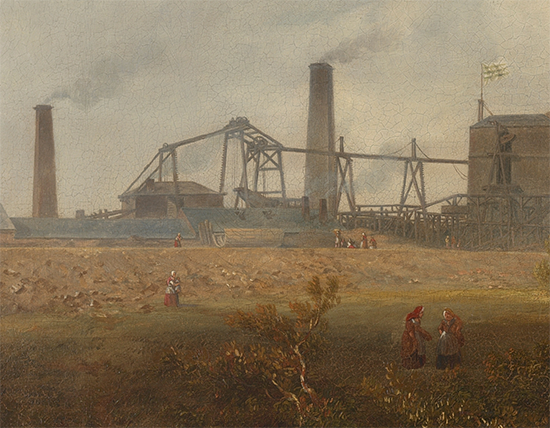
The Industrial Revolution that swept Europe and the U.S. over the nineteenth century is among the most dramatic periods of economic and technological transformation in human history. This social, economic, and technological revolution was shaped by specific assumptions about the unfettered benefits of institutional and social change and organization for the sake of efficiency. [6]
In addition, the expansion of the market into every area of life served to commodify not only goods but also the whole range of human experience. These changes altered the social imagination of the West, making it feasible for women to live and define themselves as individuals without reference to family. [7] While most women still pursued marriage and children, these fundamental social commitments became increasingly a matter of choice rather than necessity.
No area of life evaded the influence of the industrial revolution. The most direct change came in the exit of men from the daily affairs of the home. Prior to the industrial revolution, most men farmed, manufactured goods in their homes, or served as merchants in shops with their families.
This system of labor was not organized for efficiency and work schedules. These labors were arranged to serve the needs of the family. They thought of time according to “human rhythms and seasonal variations.” This also meant men played a significant role in household chores. [8] Once men began submitting to the the factory clock, leaving their families early in the morning and returning exhausted late at night (many worked 12- to 14-hour days), the whole structure of life changed.
Pre-industrial family life was filled with hard work, but it was accompanied by communal leisure activities: regular community and church events where people shared food and played games, and folks of all ages danced to reels and jigs. Less formal and private leisure time was casual and noncommercial. Regular family entertainment included, among other things, walks through the countryside or city park, visiting friends, reading as a family, listening to street musicians, playing cards, weaving, sewing, and quilting. [9] Those in urban centers enjoyed occasional trips to amusement parks, movie theatres, or trolley rides across town. Regardless of the activity, they were family-centered. As late as the early twentieth century, two-thirds of skilled workmen claimed they spent leisure time with their families. [10]
However, at the turn of the twentieth century, these modes of life began to change significantly. Many male factory workers began using wages to engage in non-family leisure: bowling alleys, pool halls, shooting galleries, gyms, smoke shops, barber shops, lodges and clubs, and saloons where women and children were unwelcome (unless the women were prostitutes). These places of “leisure” advertised bright, open, clean spaces filled with entertainment to men seeking relief from loud, dangerous factory work and overfilled, dingy, and cramped tenements with family and chores. They spent scarce free time and money commiserating with fellow laborers about the floor boss at work or the ever-looming threat of layoffs. [12]
Married women were left home to shoulder the entirety of household chores and to care for children. Though housework began to be mechanized, and more food and clothing could be purchased outside the home, the standards of cleanliness also rose, meaning the overall time women committed to housework remained close to fifty hours a week, even into the mid-twentieth century. [13]
Women’s leisure was largely limited to the home. In urban centers, they visited with other women at the window or doorstep, walked in the park, visited relatives and friends, attended occasional dinner parties, decorated the home, or took part in ladies’ organizations. [14] Many of these same activities were also available in rural areas, along with traditional communal activities like quilting circles.
However, with the birth of modern suburbia in the late 1940s, the married woman was “abandoned” by her husband, who took the family car to work while the children went to school, and she remained isolated in an abstracted housing allotment without tradition, family, or communal identity. Betty Friedan’s rant against the life of a housewife in The Feminine Mystique was informed by these detrimental changes to society brought on by industrialization.
Many women agreed with her assessment and began joining the workforce, though the shift was slow to gain momentum. In fact, Friedan found women so unenthusiastic about the prospects of working outside the home that she began working through the state to undermine the financial security of marriage by eliminating barriers to divorce and promoting the Equal Rights Amendment.
How Should We Then Live as a Family?
Perhaps this glimpse of how our society was transformed by industrialization helps to explain why those wishing to defend the nuclear family cannot ignore the economic assumptions of our day. Preserving the family requires more of us than careful voting or family prayer time, though both of those activities are necessary.
Rather, we need to assess how the marketplace has invaded our homes and atomized our families into free-floating individuals who come together only briefly each day and primarily sleep in our own rooms.
As much as I might wish we could somehow return to a preindustrial world, I do not think we will see that until Jesus returns (though I do suspect the New Earth will be a pre-industrial earth).
In the meantime, here are some recommendations for dealing with the realities of our current life:
Seek jobs and careers that allow for family time and flexibility.
Carefully consider living on a single income, at least while children are living at home. This does not mean wives and mothers cannot or do not contribute to the family income, only that their contribution will be largely carried out from the context of the home and often include the children. [15]
As much as possible, make financial decisions family decisions rather than individual ones, even if both parents work outside the home.
Be intentional when it comes to sharing the burdens of housework.
Celebrate and make the most of family leisure time (and strictly limit screen usage during these treasured moments).
Give serious consideration to homeschooling.
To be clear, these are recommendations only, with significant room for disagreement on these matters. Further, each family will look different based on individual context. Still, I think these are good starting points for counteracting the destructive changes flowing from the Industrial Revolution.
About the Writer: Phillip Morgan is History Program coordinator
and Humanities and Arts coordinator at Welch College.
This article is adapted from an essay previously published on Helwys Society Forum.
Berry observes that no one has ever claimed men were liberated by entering the workforce away from home. Wendell Berry. Sex, Economy, Freedom, and Community: Eight Essays (New York: Pantheon, 1993),122-23.
For an overview of female anti-feminist thought and activity, see Thomas Jablonsky. “Female Opposition: The Anti-Suffrage Campaign,” in Votes for Women: The Struggle for Suffrage Revisited, ed. Jean H. Baker (New York: Oxford University Press, 2002); and Sally G. McMillen. Seneca Falls and the Origins of the Women’s Rights Movement (New York: Oxford University Press, 2008), 136-39.
Even Mary Wollstonecraft and John Godwin decided it was better to abandon their libertine sexual ideals and wed one another in the face of the practical results of having children out of wedlock. See Carrie Gress, The End of Woman: How Smashing the Patriarchy Has Destroyed Us (Washington, D.C.: Regnery, 2023), 11.
Charles Taylor, A Secular Age (Cambridge, MA: Belknap, 2007), 171-72.
See Thomas P. Hughes, Human-Built World: How to Think about Technology and Culture, Science.culture, ed. Steven Shapin (Chicago: University of Chicago Press, 2004); Beth Moreton, To Serve God and Wal-Mart: The Making of Christian Free Enterprise (Cambridge, MA: Harvard University Press, 2009); David E. Nye, American Technological Sublime (Cambridge, MA: MIT Press, 1994); David E. Nye, Consuming Power: A Social History of American Energies (Cambridge, MA: MIT Press, 1998); Emily S. Rosenberg, Financial Missionaries to the World: The Politics and
Culture of Dollar Diplomacy, 1900–1930 (Durham, NC: Duke University Press, 2003); and Arnold Toynbee, Lectures on the Industrial Revolution of the Eighteenth Century in England: Popular Addresses, Notes, and Other Fragments, 2nd ed. (London: Rivingtons, 1887).
Thomas J. Schlereth, Victorian America: Transformations in Everyday Life, 1876–1915 (New York: Harper Perennial, 1991), 63-64; and Gavin Weightman, The Industrial Revolutionaries: The Making of the Modern World, 1776–1914 (New York: Grove, 2007), 3.
This new independence was grounded in a sense of autonomy that had not existed in the Roman Catholic convents that provided a means for women to live independent of familial connections but still within the context of a tight-knit community.
Nye, Consuming Power, 52, 153.
Peiss, Cheap Amusements, 13.
Ibid,15–16.
Ibid, 16-18, 21. The prohibitionist social reformers were not exaggerating when they claimed many men spent and drank the family’s rent and food money.
Nye. Consuming Power, 153.
Peiss. Cheap Amusements, 22–26.
Part of our culture’s dismissive attitude toward homemakers is grounded in the false determination that housework is not productive because it does not include a paycheck. Interestingly, American communist women in the 1940s (looking to overthrow the free market and the American government) had an extended debate about the value of housework. They concluded housewives were not producers of wealth, thus housework was rejected as legitimate labor. See Gress, The End of Woman, 69.