The column "Leadership Whiteboard" provides a short visual leadership coaching moment. It introduces and explains a new sketch in each issue, provides leadership coaching for further development, and shares a leadership quote and recommended book.
Leadership Whiteboard | Phrases Leaders Struggle to Say, Part 4
The first three installments of Phrases Leaders Struggle to Say explored courage and conviction, capacity and pace, and course correction. Each theme pointed to a leader’s willingness to act with clarity. This column moves deeper, into the personal responsibility that shapes trust: humility.
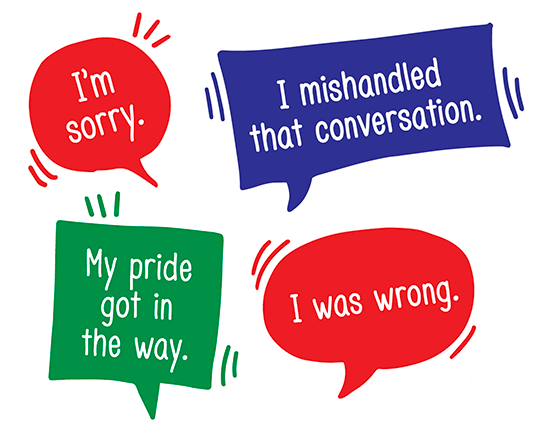
Few phrases carry more weight than, “I’m sorry.” An apology requires a leader to step out from behind positions and into accountability. When leaders admit error, they create margin for others to do the same. That margin does not excuse repeated carelessness, yet it does acknowledge mistakes are part of growth. Even costly errors can become tuition to educate future decisions.
Teams know they can be honest about failure, stop posturing, and start learning. Apology restores trust and begins rebuilding bridges silence quietly damaged.
The words, “I was wrong,” may be the smartest admission a leader can make. Leaders often carry pressure to appear confident, yet growth requires reflection. John Maxwell stated, “Experience is not the best teacher; evaluated experience is.” Many leaders avoid revisiting mistakes, yet an honest after-action review often reveals blind spots and missed signals. Leaders who walk back decisions with humility gain clarity others never reach. Admitting an error sharpens judgment and strengthens credibility.
Saying, “I mishandled that conversation,” demands quick awareness and humility. Both introverted and extroverted leaders can say things in ways never intended. Biting humor, careless wording, or subtle insinuation can land harder than expected. In some cases, leaders need someone they trust to point out the problem. Most missteps relate to speaking before fully listening or misplaced humor from a position of power. Addressing the moment quickly prevents misunderstanding from hardening into resentment. Timely correction protects relationships and keeps communication healthy.
Admitting, “My pride got in the way,” reaches even deeper. Leadership can quietly shift expectations toward entitlement. Strong leaders remember their roles begin with service. Christ consistently pointed His disciples to serving rather than status or position. Those servant-leader disciples went on to pastor, teach, and reach others because they knew the true Leader and the service their roles required. When leaders begin to assume others exist to serve them, an accountability check is necessary (which we will address in the next column). Leaders who confront their own pride lead with greater awareness and steadier influence.
These phrases share a common humble responsibility, which strengthens leadership from the inside out. Leaders who apologize rebuild trust. Leaders who admit error grow in wisdom. Leaders who correct conversations protect relationships. Leaders who confront pride lead with clarity and purpose.
Humility does not weaken leadership; it anchors it.