Thus speaketh the LORD of hosts, saying, Execute true judgment, and shew mercy and compassions every man to his brother” (Zechariah 7:9).
Every morning the four-year-old twin brothers hit the ground running. Mom and Dad employed a German nurse — “Neenie” the boys called her — to look after them. Quickly outgrowing Theodore, Georgie was noted for his “large lustrous eyes and bewitching mouth and golden hair,” and he was always into something. One of his first prayers was, “O God, please to make Georgie a good little boy, right away!”
Their father had graduated from Princeton and thought seriously of becoming a lawyer like his father and grandfather. But after he had conducted a home Bible study one day, a listener told him his words had helped, and he set his cap for the ministry.
Pastor Cuyler traveled the world and mixed comfortably with the rich and famous. He rubbed shoulders with the creators of Ebenezer Scrooge (Charles Dickens) and the scary “headless horseman” (Washington Irving). Once he took his mother to see President Abraham Lincoln in his office. After the visit, she said: “Did you ever see such a sad face in your life?”
Cuyler pastored a large Presbyterian congregation in New York City. When he retired in 1890, after a pastorate of almost thirty years, 4,223 had joined his church. They honored him with a gift of $30,000, over a million dollars in today’s money.
But let’s return to the four-year-olds, who knew nothing about the fame and fortune of their father. He was just Dad to them. On Saturday, April 18, 1868, when the twins headed to bed, their cheeks showed “a peculiar flush.”
Georgie said, “My little footies are tired at both ends.” By morning, the family realized both children were suffering from scarlet fever. In those days before antibiotics, it killed about one in three who caught it. Within a few hours, the disease had ravaged Georgie’s body. He didn’t survive the day. On Wednesday, the Cuylers laid him to rest in Greenwood Cemetery in a little white coffin.
Condolences poured in. One letter read: “To consign our lovely cherubs to the tomb, is a prostrating agony; but when we can raise our heads in the serene hope of a reunion, the keenest edge of sorrow is tempered.”
A Native American woman enclosed seeds with her letter: “Ah! my brother, the Great Spirit has a beautiful garden, where live the little red and pale-face pappooses [sic], free from all earth’s storms….Will you plant on his grave these star-flowers?”
Ten years after the lad’s passing, Arthur Penrhyn Stanley, a friend of Pastor Cuyler’s, came to America. As Dean of Westminster in London, he spoke regularly at Westminster Abbey. Renowned for his writings, he exuded scholarship.
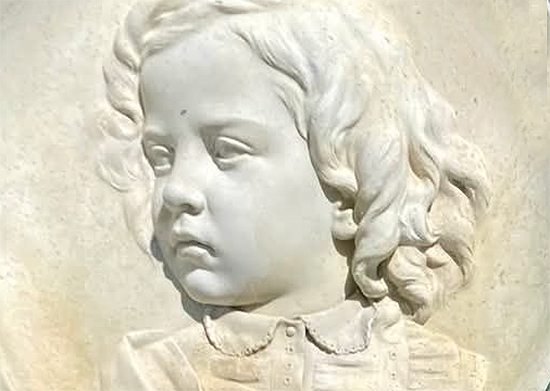
The day he was to sail home, he and the Cuyler family visited Georgie’s grave. Cuyler recalled decades later what Dean Stanley did: “When we reached the burial lot he got out of the carriage, and in the driving wind, of a raw November morning, spent some time in examining the marble medallion of the child, and in talking with my wife most sweetly about him.”
Cuyler wrote: “I could have hugged the man on the spot.”
Oh, the power of compassion!
About the Columnist: Paul V. Harrison has pastored Madison FWB Church in Madison, Alabama since 2015. Previously, he pastored Cross Timbers FWB church in Nashville, Tennessee, for 22 years. He was an adjunct professor at Welch College for 17 years, teaching church history and Greek. Paul is the creator of Classic Sermon Index, a subscription-based online index of over 66,000 sermons, with clients including Harvard, Baylor, and Vanderbilt, among others: classicsermonindex.com.