“For ye see your calling, brethren, how that not many wise men after the flesh, not many mighty, not many noble, are called” (1 Corinthians 1:26).
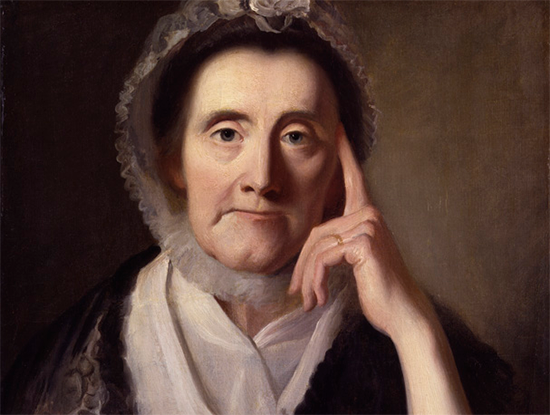
Daughter of one earl and wife of another, Selina, Countess of Huntingdon (1707-1791), exuded love for people. Rich, poor, it mattered not. Each person was a soul for whom Christ died, and she determined to be an instrument of their conversion in the Lord’s mighty hand.
Walking about her spacious grounds one day, she spoke with James, a worker repairing her garden wall. She pressed on him the claims of Christ. No response. Some years later, Selina spoke to another of her hired hands: “Thomas, I fear you never pray, nor look to Christ for salvation.”
“Your ladyship is mistaken,” he replied. “I heard what passed between you and James…and the word you designed for him took effect on me.”
“How did you hear it?” she inquired.
“I heard it on the other side of the garden, through a hole in the wall: and shall never forget the impression I received.”
Selina wasn’t just bold in witness with those below her socially. Learning of excessive social frivolity at the Archbishop of Canterbury’s residence in London, she went to King George III and asked him to intervene. Despite her boldness, the King was enchanted by her charm and commented after their lengthy conversation: “I wish there was a Lady Huntingdon in every diocese in my kingdom. There is something so noble, so commanding, and…engaging about her, that I am quite captivated with her Ladyship….She is an honour to her sex and the nation.”
For the Countess to receive such praise was not unusual. Preacher-poet Augustus Toplady, author of “Rock of Ages,” called her “the most precious saint of God I ever knew.”
Converted in 1739 through the Methodist movement, Selina listened to George Whitefield and the Wesley brothers, John and Charles, whose powerful preaching swept England. Aflame for God, she began to finance these ministers and many others who engaged in open air preaching to vast audiences of the poor and middle class.
Realizing her peers — lords and ladies and courtesans — also needed the gospel, she expanded her Chelsea farm to accommodate occasions for preaching. Many English aristocrats responded to her hospitality, heard the message, and bowed before Christ.
Widowed after 18 years of marriage, Selina used her wealth to fund Christian causes, building chapels far and wide and establishing over a hundred preaching points. She strained her expansive income to the breaking point, even selling personal jewels to finance the Lord’s work. Her charitable contributions exceeded $40 million! She founded Trevecca College in Wales to train ministers, investing as much in the students’ preaching trips as in their academic training.
In 1790, her health spent, Selina wrote: “Let me die with my last breath labouring for him.”
At her death, the attending doctor marveled: “Her whole life seemed devoted to one great object: the glory of God, and the salvation of his creatures.”
She herself said: “My shame will be I have lived so little for him.”
About the Columnist: Paul V. Harrison has pastored Madison FWB Church in Madison, Alabama since 2015. Previously, he pastored Cross Timbers FWB church in Nashville, Tennessee, for 22 years. He was an adjunct professor at Welch College for 17 years, teaching church history and Greek. Paul is the creator of Classic Sermon Index, a subscription-based online index of over 66,000 sermons, with clients including Harvard, Baylor, and Vanderbilt, among others: classicsermonindex.com.