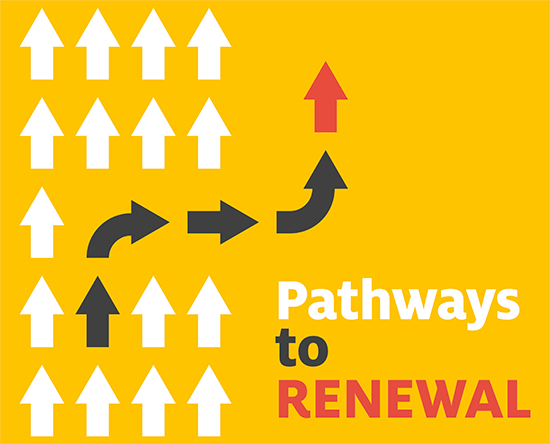
Pathways to Renewal: Realistic Steps to Revitalization
In the first article in the State of the Church series, I wrote about “Facing the Decline.” It wasn’t a fun or encouraging article to write. But it is important to state the facts clearly before proposing a solution. Last time, I delivered the bad news. Now, let’s consider some good news.
Church revitalization is possible, and it’s happening. Across the country, Free Will Baptist churches are rediscovering their mission, reaching new people, and building momentum. We are also planting healthy new churches helping to turn the tide. In 2025, NAM church plants celebrated 220 salvations and 180 baptisms. Many established churches are healthy, growing, and seeing people saved and baptized.
While scrolling through social media recently, I saw several churches that set attendance records this year, which is extremely encouraging. But revitalization isn't just meeting a one-time attendance goal. It takes vision, leadership, and strategic action.
Consider an encouraging statistic. In 2023, a Lifeway Research study revealed nearly 70% of churches that implemented intentional revitalization efforts saw measurable growth within three years. That includes increased attendance, baptisms, and financial health. The key is focused change. So, what does that look like for Free Will Baptist churches? Here are a few practical but essential suggestions for any church seeking revitalization.
Refocus on the Mission
I will dedicate an entire article to this later in this series, but let me remind you that revitalization starts by reembracing the Great Commission. This means moving from maintenance to mission, focusing not just on keeping people happy but reaching people far from God. Healthy churches prioritize evangelism, disciple-making, and leadership development. This may sound too simple.
And though it’s not a guarantee to fix every problem, it is a starting point. If every church simply refocused on the mission of the Church — to make disciples — it would go a long way in reversing church decline.
Evaluate Honestly
Churches need to assess where they are and determine where they need to go. Tools like NAM’s Fresh Wind Guide church assessment can help identify blind spots. Is your church welcoming? Is your preaching relevant and biblical? Is your leadership pipeline working? The most effective way to move from Point A to Point B is to know where you are and where you need to go. Assessment isn’t always enjoyable because it exposes flaws, but the best way to address problems is to acknowledge they exist. NAM has a recently updated resource titled Fresh Wind: A Church Revitalization Strategic Plan available free to every church. Contact us at fwbnam.com for more information.
Strengthen the Pastor/Leader
Church revitalization rises and falls on leadership, and many pastors are tired and under-equipped for leading a turnaround. Investment in pastoral health and leadership development is essential. Churches with revitalized pastors are twice as likely to grow. Give your pastor the resources and permission he needs to lead well.
The Executive Office and North American Ministries are at the forefront of providing quality resources, care, and training for pastors. We provide free coaching and counseling
to pastors and their families. Many other resources are available, including a pastor’s resource video series (fwbnam.com/revitalization), First Aid Ready resources, Know Your Community, The Hope Initiative, The Bless App, Better Together Podcast, and so much more (nafwb.org/resources). Free Will Baptists have never enjoyed as many resources as we have available today, but they must be accessed (and used) to be helpful.
Engage the Community
Thriving churches don’t just exist in a community; they engage with it. They see neighborhoods as their mission field and intentionally build bridges through events, partnerships, and outreach. They listen with compassion, learn the needs of their neighbors, and speak the language of the people they are called to reach. This is what it means to live out the gospel.
However, far too many churches remain on the sidelines. Their buildings are surrounded by neighbors who hardly know they exist. Congregations gather faithfully inside, while the community outside remains untouched and unchanged. This is not how God designed it to be! The church is called to be salt and light, to influence the place God has planted it. Every community should feel the presence of the local church, not because of its building, but because of its love, service, and engagement.
When a congregation truly engages its mission field, the gospel gains credibility, hearts are changed, and lives are transformed. It’s time for churches to stop blending into the background and stand out by making a difference. Our communities are waiting — not for another building, but for people who will step out, show up, and shine the light of Christ where it’s needed most.
Update Your Systems
Most dying churches, at least in our denomination, don’t have a theology problem; they have a systems problem. Without clear processes for outreach, assimilation, leadership development, discipleship, and more, churches stall. Healthy systems create a structure for mission. I recommend every pastor read my book, Creating Healthy Church Systems, available from D6 Family Ministry. It contains helpful suggestions churches can easily implement to improve their systems. Revitalization doesn’t require a massive budget or flashy programs, but it does require courage to change and unwavering commitment to the gospel.
Every church can take steps forward, but it begins with the first step. Take it. A few years ago, Danny Dwyer noted, “When it comes to church revitalization, the need is greater than our interest, and our interest is greater than our commitment.”
If we want to avert further crises, the time to act is now!
A Call to Renewal
The story of revitalization is not about what churches used to be, but about what God still wants to do through them. The decline is real, but so is the hope of renewal. Across our denomination, churches are proving that when God’s people embrace His mission, assess with honesty, strengthen leaders, engage communities, and build healthy systems, transformation happens.
Every church — no matter the size, location, or current condition — can take a step toward health. Revitalization is not reserved for the exceptional church; it is possible for any church willing to realign itself with the gospel and commit to the hard but rewarding work of change. The question is whether we are willing to act.
The future of Free Will Baptists will not be determined by our challenges, but by our response. Will we sit back and hope for things to get better? Or will we courageously step forward and follow God’s leading toward renewal? Renewal is possible. Revival is needed, and with God’s help, we can see our churches not just survive but thrive for generations to come.
In the next article in this series, we will explore: Don’t Lose Heart! Staying Focused on Discipleship.